
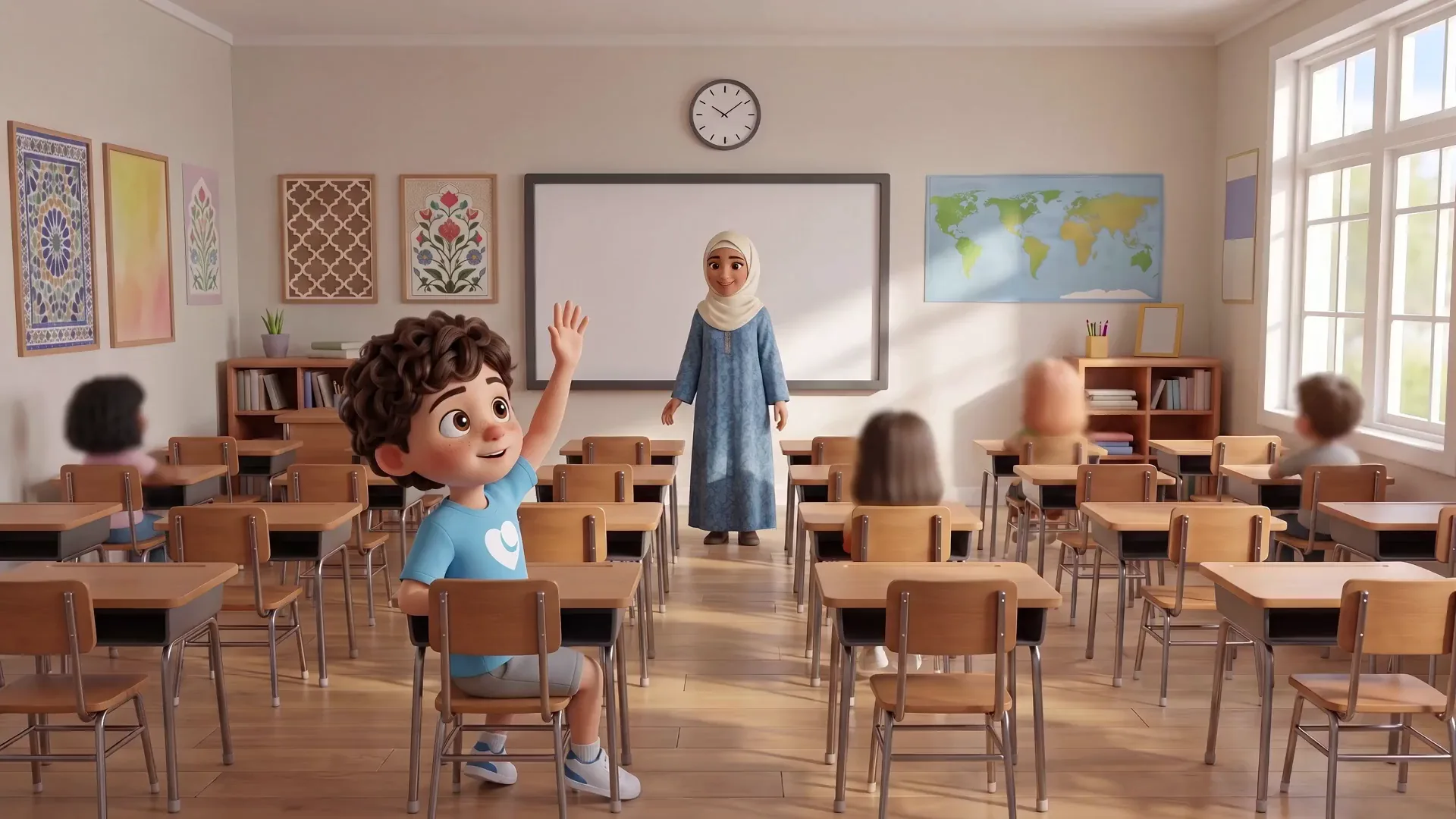
It starts with a question.
A child hears an ayah and wants to know what it actually means. Not how to pronounce it. What it means. That question is where every episode begins.
Meaning first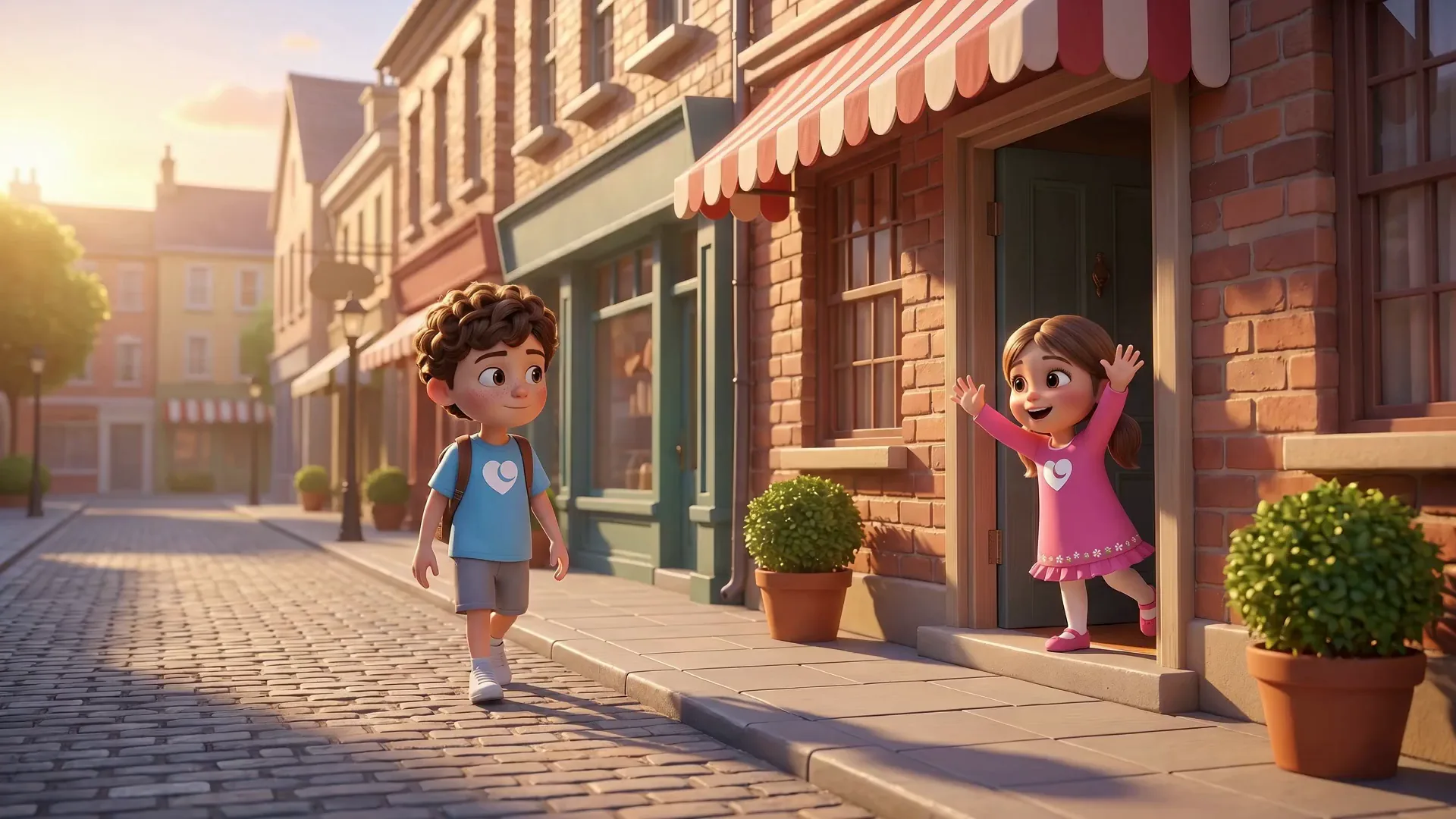
The question walks home with him.
It is not answered by a screen on the pavement. The wondering is allowed to last the whole way home, because a question a child carries is a question a child keeps.
No rush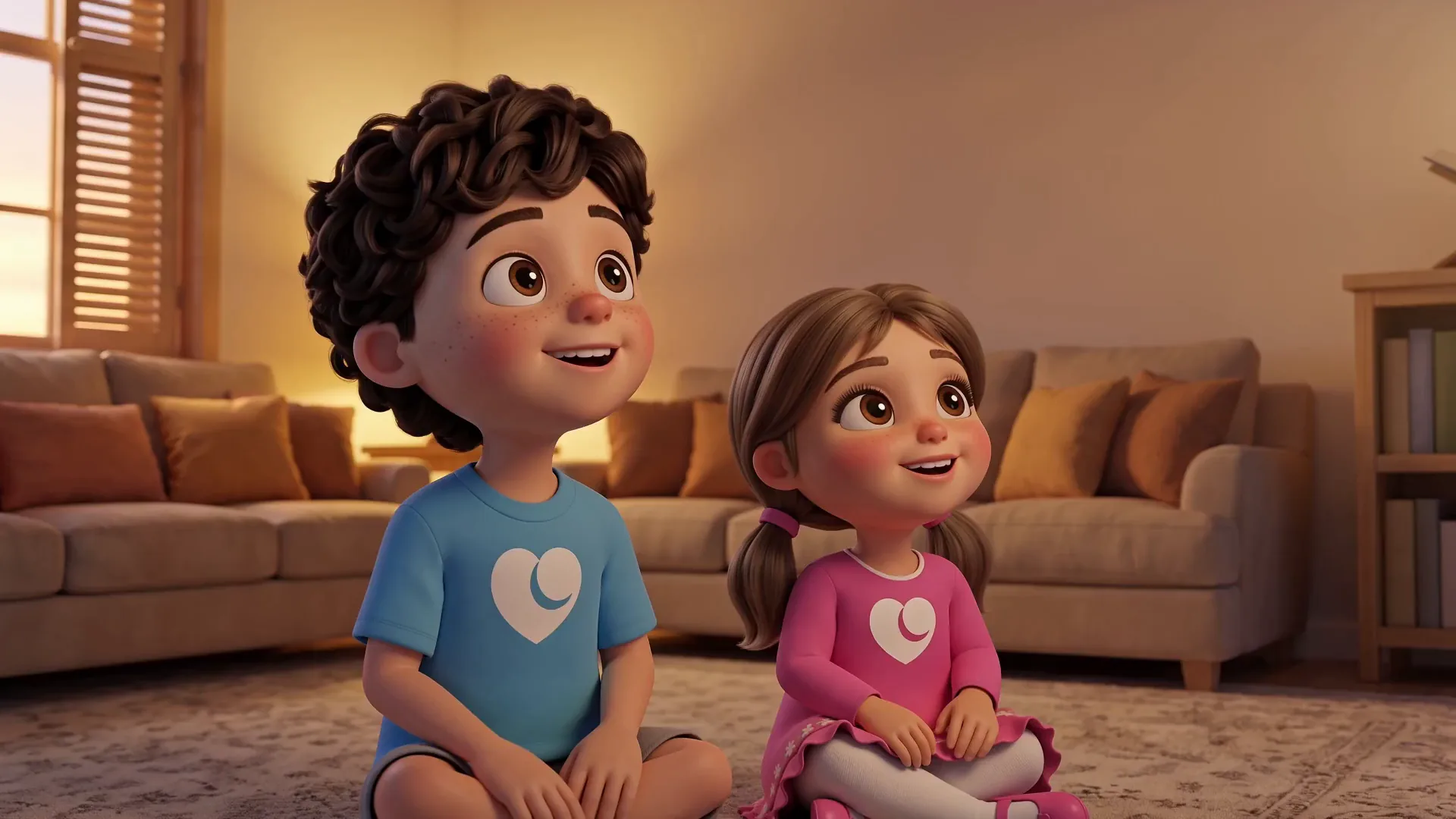
Then someone he loves tells him.
A parent tells the story, the way stories have always reached children. The episode hands the family the words. The family gives the child the warmth. That order matters, and we never reverse it.
Told by family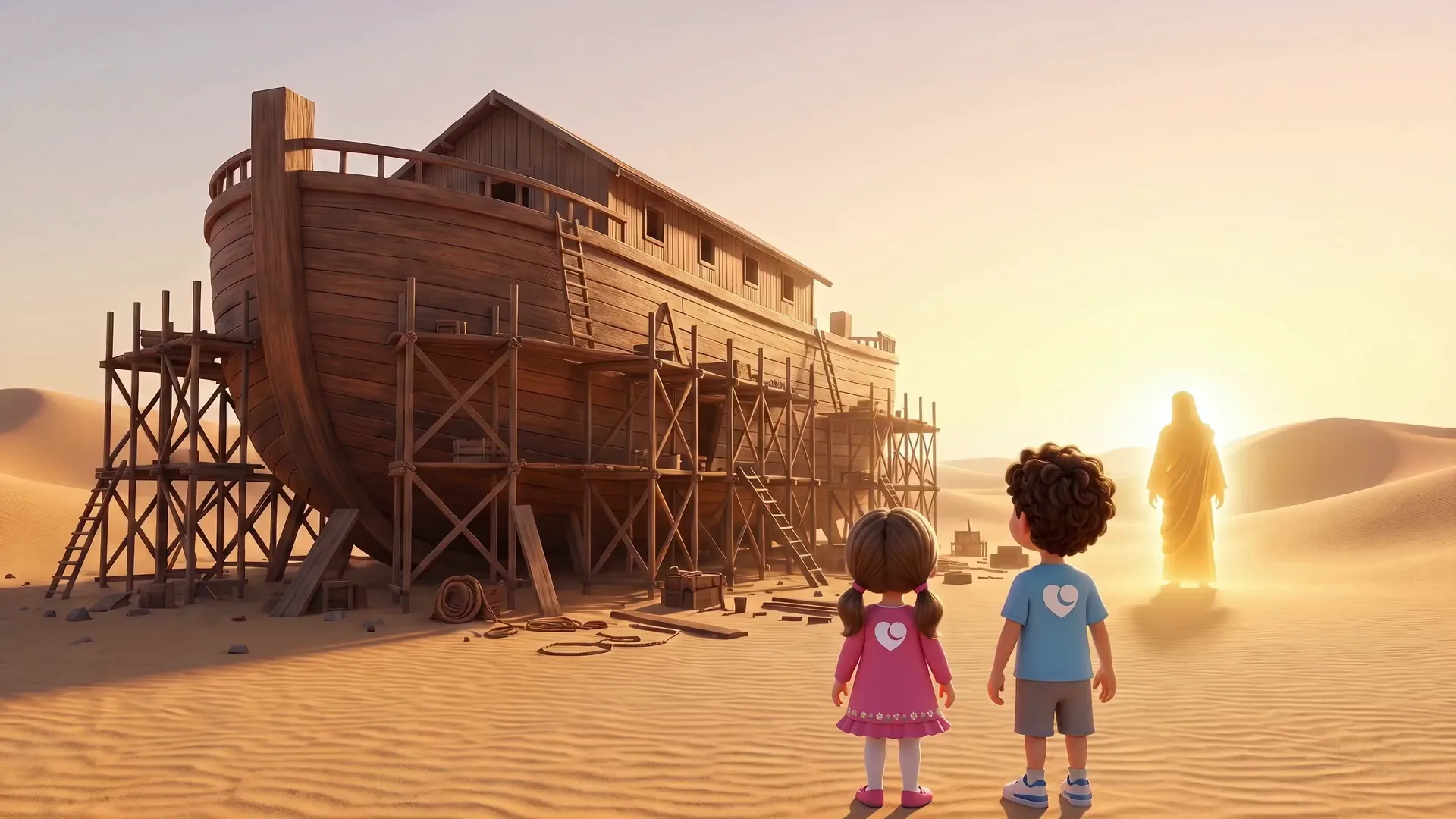
And the ayah opens into a world.
Every story is drawn from classical tafsir, never invented and never improvised. Prophets are never given a face: they appear only as light, in the dress of their own age.
Faithful to tafsir
He does not just learn the words. He understands them.
Every ayah is given one image a child cannot forget. A well that becomes a road. A thread of light in the deepest dark. Understanding arrives first, and memory follows it home on its own.
Understanding, not rote
A long ayah arrives one phrase at a time.
A long verse is broken at its own natural phrases, and each phrase is given its own episode. A child takes a mouthful he can actually hold, instead of a line he can only stumble through.
Phrase by phrase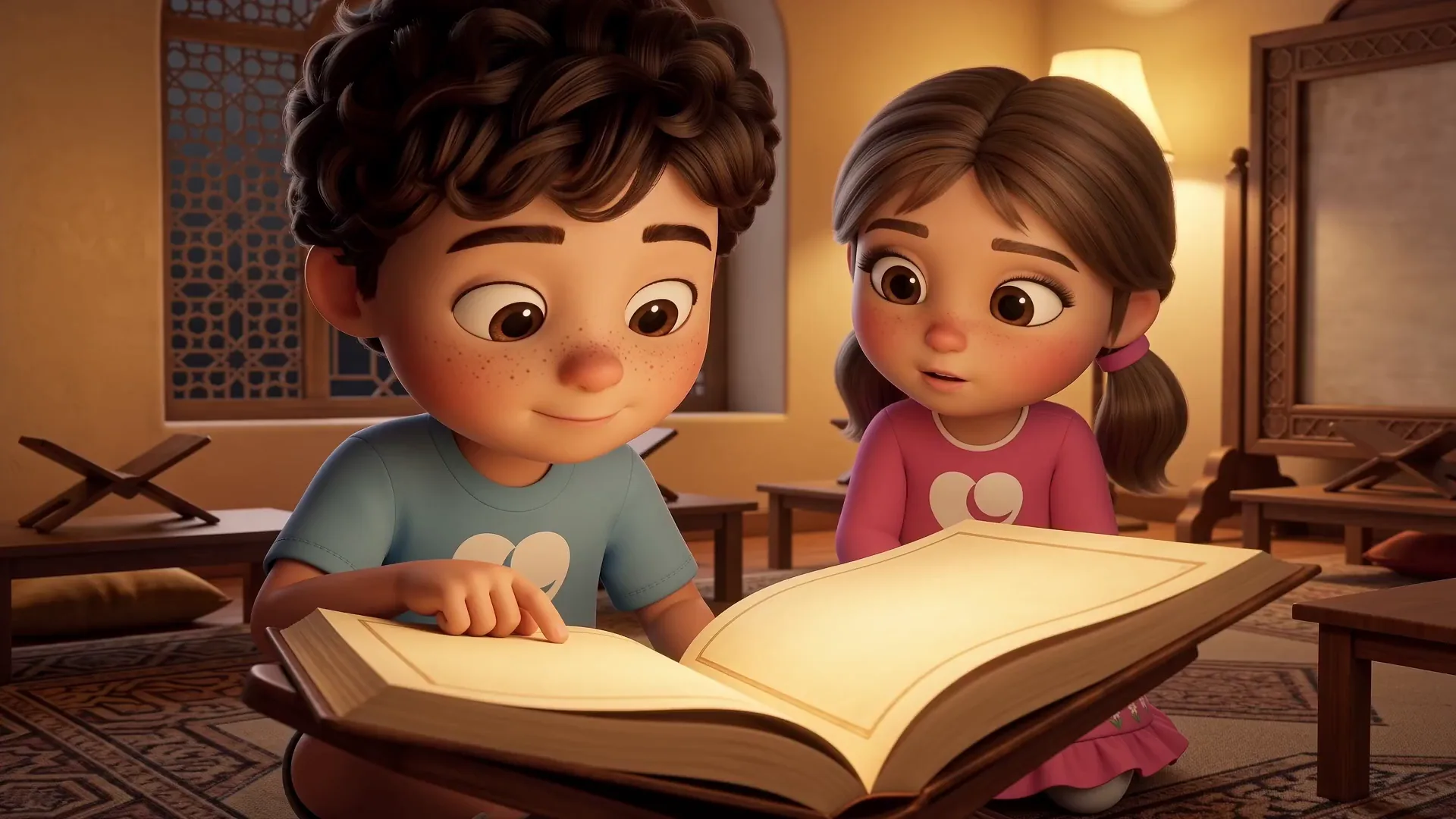
Then he reads it back, word by word.
Each word lights up at the moment it is recited, in the language your family speaks alongside the Arabic, so the sound, the shape and the meaning all arrive together instead of years apart.
Multilingual, word by word
6,236 ayahs. He will never run out.
The Qur'an holds 6,236 ayahs, and every one of them is a story waiting to be told. We are near the beginning of that road, and new episodes arrive as they are finished. Your child keeps going for as long as he wants to.
The full mushaf, all 604 pages, with no subscription and no account.